NOAA Ship Rainier charts volatile, glacially active waters in Glacier Bay National Park
By ENS P. Giamportone and ENS N. Greenlaw
In August 2025, NOAA Ship Rainier pulled into Lituya (lih-TOO-yuh) Bay, an inlet tucked within the outer edge of Glacier Bay National Park. The name is of Tlingit origin, meaning “lake within the point,” and the Bay has long been a source of sustenance and shelter. The entrance is narrow and turbulent, and the glacial walls make it vulnerable to rockslides and their following waves.

Lituya Bay’s dangerous waters were famously documented during a 1786 expedition by French explorer Jean-François de Galaup, comte de La Pérouse.
NOAA Ship Rainier at anchor in Lituya Bay, July 27th, 2025 (LT Kevin Tennyson/NOAA)
La Pérouse’s ships, the Astrolabe and Boussole, anchored in July 1786. Drawing by Gaspard Duché de Vancy, the official artist during La Pérouse’s expedition.
While conducting hydrographic measurements near the mouth of the Bay, La Pérouse lost 21 experienced crew members and two small boats to the powerful tidal currents exiting Lituya. The event was immortalized by painter Louis-Phillipe Crépin in 1806 in his painting Shipwreck off the Coast of Alaska, which now sits in the Seattle Art Museum.

The Bay is fed by three large glaciers (Lituya, Cascade, and North Crillon) and is known for its record-breaking tsunami wave, a 1,200 foot wall of water in 1958 that washed up the nearby hillside after a portion of the mountain face sheared off.
Geological events such as these have altered the seafloor dramatically over time–and continue to do so, particularly in Alaska. In fact, towards the end of Rainier’s survey, a landslide near Tracy Arm–just 150 miles away from the ship–caused a tsunami across Southeast Alaska with waves up to 15 feet high.
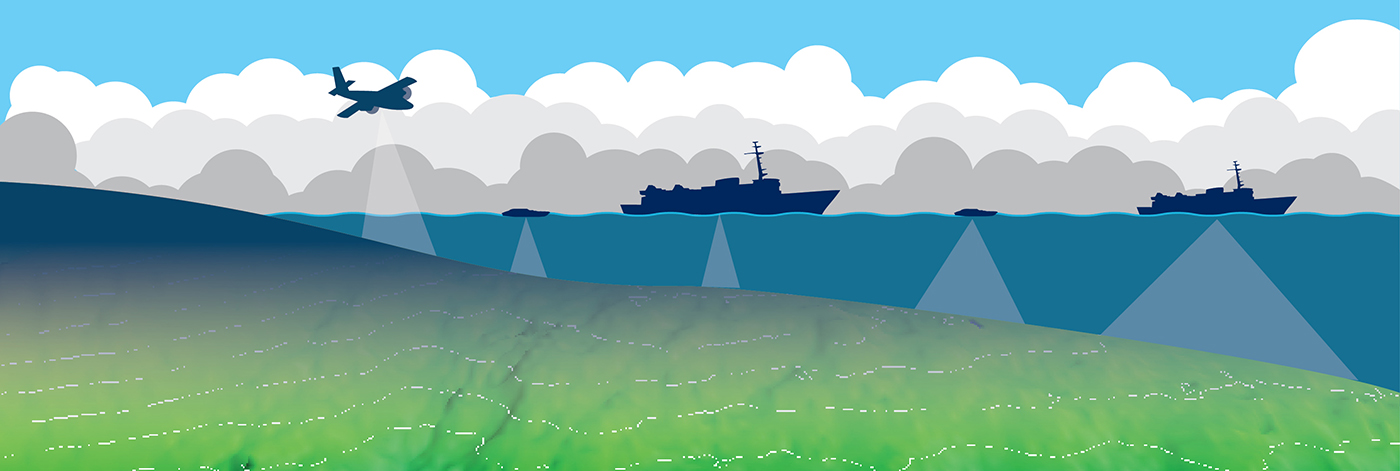
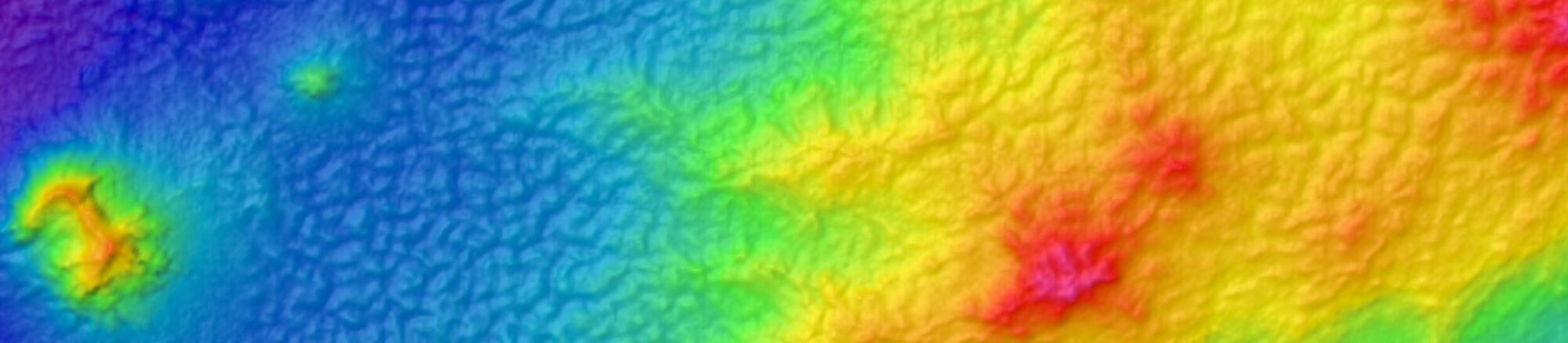
To gain a better understanding of how the seafloor changes with geologic activity, and to improve the accuracy of nautical chats, the National Park Service and NOAA’s Office of Coast Survey partnered to have the NOAA ship Rainier conduct high-resolution bathymetric mapping using multibeam sonar. A comprehensive survey of this area has not been done since 1959.

Over the course of 5 days, a team of hydrographers drove 301 nautical miles to map 15.5 square miles of seafloor using high-resolution bathymetric sensors mounted to Rainier’s 28-foot survey launches.

The data revealed striking discrepancies between the historic charts and the modern seafloor.

“It was a pretty unique situation,” said Chief Hydrographic Survey Technician Jim Jacobson. “The entire head of the Bay had filled in—on the chart, it showed depths of up to 129 meters, but in reality, it was walkable land.”
This dramatic change is due to shearing rockslides believed to be the result of recent landslides and the natural glacial sediment load funneled through the valley.

Glacier Bay National Park and Preserve receives over 700,000 visitors annually and as the National Park states, “The vast majority of Glacier Bay visitors travel by water …Most visitors never go ashore, visiting on cruise ships”. Creating and updating accurate nautical charts is paramount to the Park’s success and to ensuring the safety of its visitors.
The data collected by Rainier and her crew directly contributes to the safety and utility of the Nation’s marine highway infrastructure by supporting commerce, the blue economy, and a resilient coastal environment. Without this data, there is less assurance that all hazards to navigation have been located and communicated on NOAA’s charting products. This data will also be used by scientists to gain a better understanding of how landslides, tsunami waves, and more shape the seafloor.
Rainier will continue her mission to map the waterways of Alaska, dedicated to survey, safety, and science.

More photos from the expedition: